China-Brazil | Rio de Janeiro: Direct Ferry Service
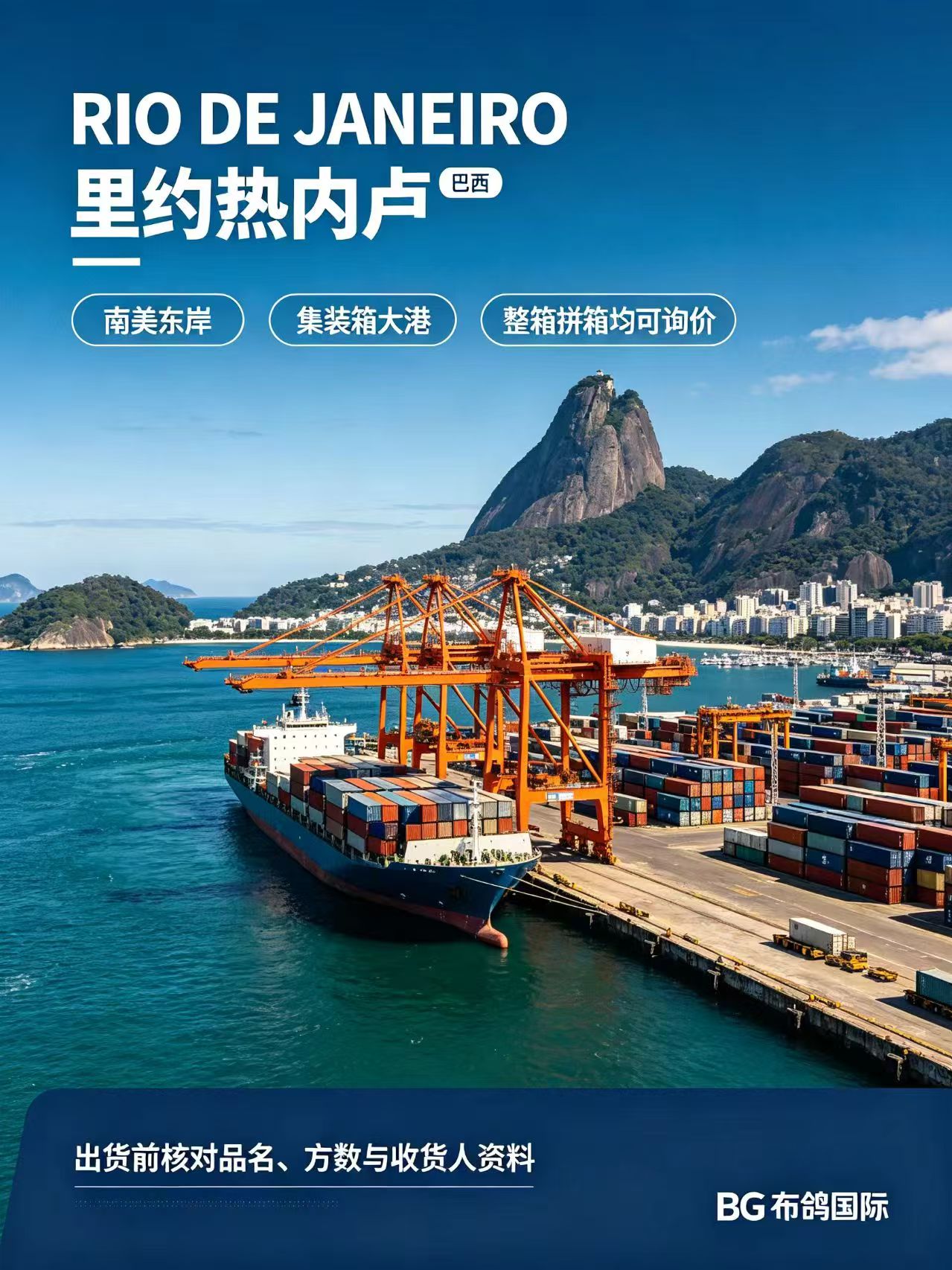
The Port of Rio de Janeiro, located on the southwest coast of Guanabara Bay in southeastern Brazil, is one of the world's renowned natural harbors. Its port code is typically BRRIO or BRRDJ. Established in 1565, the port served as the capital port of Brazil for nearly two centuries. Today, it stands as a core hub for the eastbound shipping routes in South America, primarily handling the export of coffee and iron ore, as well as the import of petroleum machinery
Basic overview and natural conditions
Geographical location: Located at 22°46' S and 43°18' W, it faces the Atlantic Ocean to the southeast and is separated from the city of Niterói by a bay.
Natural Advantages: The Guanabara Bay, with its narrow entrance and wide interior, boasts calm waters and a natural sheltered harbor with a perimeter of 30 kilometers, earning its reputation as one of the world's top three natural harbors.
Historical Evolution: In 1565, Portuguese colonists established a fortress port. From 1763 to 1960, when the capital was relocated, it served as the port of the capital and still maintains its position as the country's second largest economic center
Operational parameters and facility scale
Port code: The internationally recognized code is BRRIO, while some shipping systems use BRRDJ.
Throughput capacity: The annual cargo throughput is approximately 25 million tons, with some statistics (including liquid bulk cargo) indicating that it reached 45 million tons in 2023.
Berth water depth: The entire port shoreline exceeds 7,500 meters, with approximately 50 berths set up. The maximum water depth is 15.2 meters, allowing for the berthing of 135,000-ton ships.
Terminal distribution: It is divided into two areas, the south and the north. The south bank is equipped with container and comprehensive terminals, while the north bank is dedicated to ore and coal terminals. Oil tanker terminals are located on small islands within the bay.